
Capacity-Based Prioritization: How to Work With Your Brain, Not Against It
- Salome Savage

- Nov 11, 2025
- 3 min read
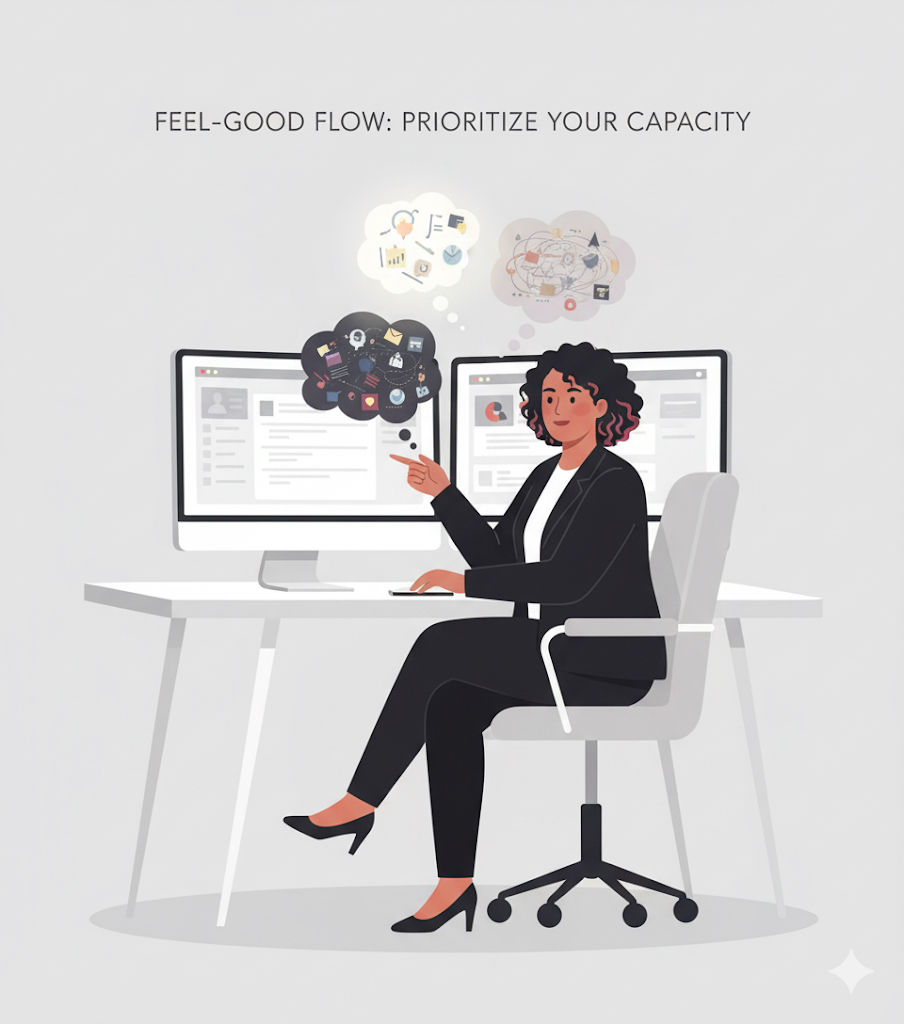
Most productivity frameworks in business were built on a single baseline assumption:
that the brain of the person doing the work functions the same every day.
Time is treated as the only variable that matters.Capacity is assumed to be stable. But real entrepreneurs do not exist inside controlled labs.We are human beings whose brains operate differently depending on what’s happening inside us and around us.
Stress, sleep, emotional load, pain, hormones, sensory input — all of these things change the “available brain” we have access to each day. And if prioritization doesn’t include that reality, people end up doing the wrong work at the wrong time — and assuming it’s a personal failing.
Why the Old Prioritization Model Fails
You know the classic advice:
“Do the most important thing first.”
That only works if your brain has the same level of executive function every morning.
For many business owners (especially those who are neurodivergent, trauma-informed, managing chronic pain, or juggling complex life systems), that is simply not true.
So when someone tries to push strategy out of a brain that is currently foggy, fried, or overwhelmed — the result looks like procrastination, avoidance, or shutdown.
But it’s not a motivation problem.
It’s a capacity mismatch.
Capacity Is Not a Soft Concept
There are days where your brain can handle strategic planning, creative ideation, problem-solving, sales conversations, and high-impact decisions.
And there are days when your brain is more suited for:
editing
cleanup
organization
admin
automation
refinement
Both states matter.
One state is not more “valuable” than the other — they are simply different cognitive modes.
Capacity is a tangible limit on:
working memory
tolerance for complexity
decision-making access
emotional bandwidth
nervous system load
Ignoring this reality is what creates shame around “not doing enough.”
This Is Where Delegation Becomes Protective
Delegation isn’t just a convenience tool — it’s a capacity strategy. Systems, SOPs, tools, and support exist so your business does not collapse every time you have a low-capacity day.
Your high-capacity days are then preserved for the work that actually deserves them.
That’s how sustainable growth is built.
How to Start Practicing Capacity-Based Prioritization Today
Here are 3 simple shifts that immediately create change:
1) Identify today’s brain state before choosing tasks- Are you clear, foggy, or overloaded?
2) Match the task category to the state you’re actually in- Clear → strategy / build workFoggy → refinement / editingOverloaded → admin / automation / rest
3) Stop demanding high-level output from a dysregulated brain- Your best brain deserves your best tasks.
Tools That Support This Model
Here are a few tools that make capacity-based prioritization easier to live out:
Notion: holds SOPs + processes so your brain doesn’t have to
Motion: schedules work based on capacity and real focus windows
Loom: quick delegation without heavy writing demands
Otter / Airgram / Fathom / Fireflies: turn meetings into actionable summaries
Forest app: supports single-task focus on overloaded days
These tools don’t make you more “productive” — they make your business more humane.
They help you work with your brain, not against it.
The Future of Work Is Nervous-System Aware
We’re moving out of the old industrial model that believed:
time = output
Neuroscience has proven:
capacity dictates output
Entrepreneurs don’t need to be at their best every day. They need operations that respect the version of themselves that shows up today — and still allow the business to move forward.
If you want support building capacity-aware systems and sustainable delegation workflows inside your business, this is exactly what we do at Virtual Synergy. You can explore our services and book a call.


Comments